Fragmented equipment
Different vendors bring different data models, control limits and command interfaces.
We develop industrial control software, hardware and edge technologies that help energy and critical infrastructure assets operate safely, intelligently and independently.
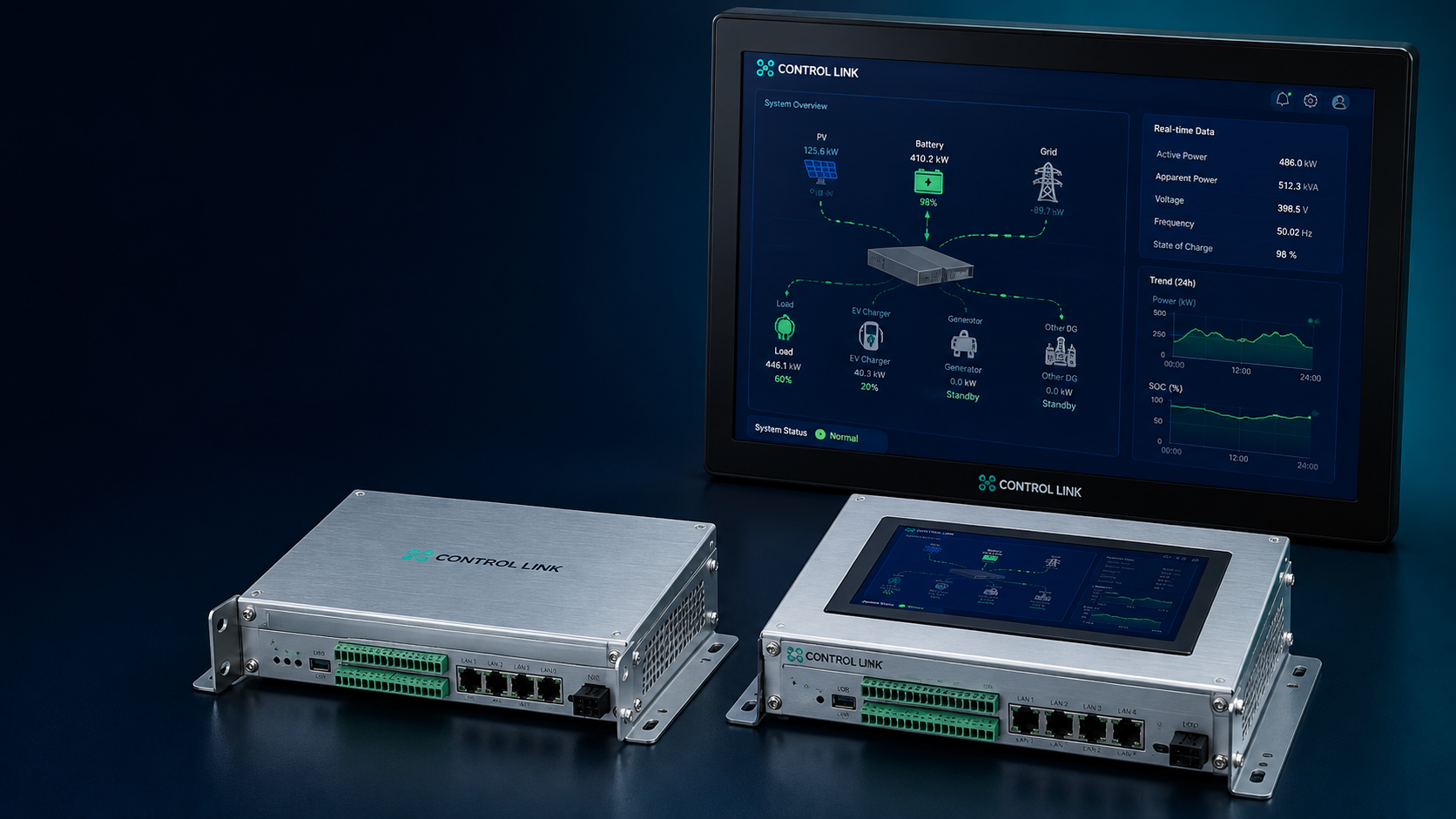
Energy assets combine BESS controls, EMS, plant controllers, SCADA, PLCs, RTUs, communications and cloud systems. The challenge is making their interfaces and operating responsibilities work together.
Different vendors bring different data models, control limits and command interfaces.
Energy costs, plant availability, battery reserves and grid constraints must be considered together.
A clear architecture, measurable acceptance criteria and documented interfaces make the choice easier to evaluate.
A common architecture for connecting equipment, coordinating energy and supporting informed operation.
Bring equipment data and commands through defined field interfaces.
Execute local control within the equipment’s operating limits.
Align solar, batteries, generation, loads and grid interfaces.
See equipment state, alarms, trends and operating history.
Inform schedules with forecasts, historic data and compatible price feeds.
These are platform functions. Hardware, software licences, interfaces and deployment options are selected for each application.
Explore the technology architecture →A practical control platform for commercial, industrial and remote energy applications, with a scalable path to larger plants.
An integrated EMS controller, local operator interface and connected software for energy assets behind the meter. Coordinate solar PV, battery storage, generators and site demand through one control platform.
An integrated control solution; generation, storage, switchgear and protection are specified separately.
A layered system of station control, coordination controllers and local equipment controllers. Match the architecture to the plant, dispatch requirements and grid connection conditions.
Hardware, control functions and grid requirements are confirmed for each project.
BESS • Renewables • Microgrids • Utilities • Data Centres
PCS and BMS interfaces, dispatch ownership, alarms and plant supervision.
Explore the application →Behind-the-meter energy management, reserves, import/export limits and operating modes.
Explore the application →RTU/PLC interfaces, telemetry quality, alarms and control-centre integration.
Explore the application →Grid capacity, battery scheduling, generation reserves and operational visibility.
Explore the application →Start with published specifications and defined capabilities. Then evaluate the proposed configuration against your operating requirements.
Compare the integrated EMS processor, I/O, communications ports, temperature range and display variants in the specification tables.
Review local control, station management, cloud monitoring and AI capabilities by deployment layer. Request a demonstration using your use case.
Request an interface matrix, acceptance-test scope, redundancy design and applicable conformity evidence before selecting a configuration.
AI assistance helps with programming, test preparation and review. Reusable configurations and clear equipment views help teams reduce repetitive work and avoidable human errors.
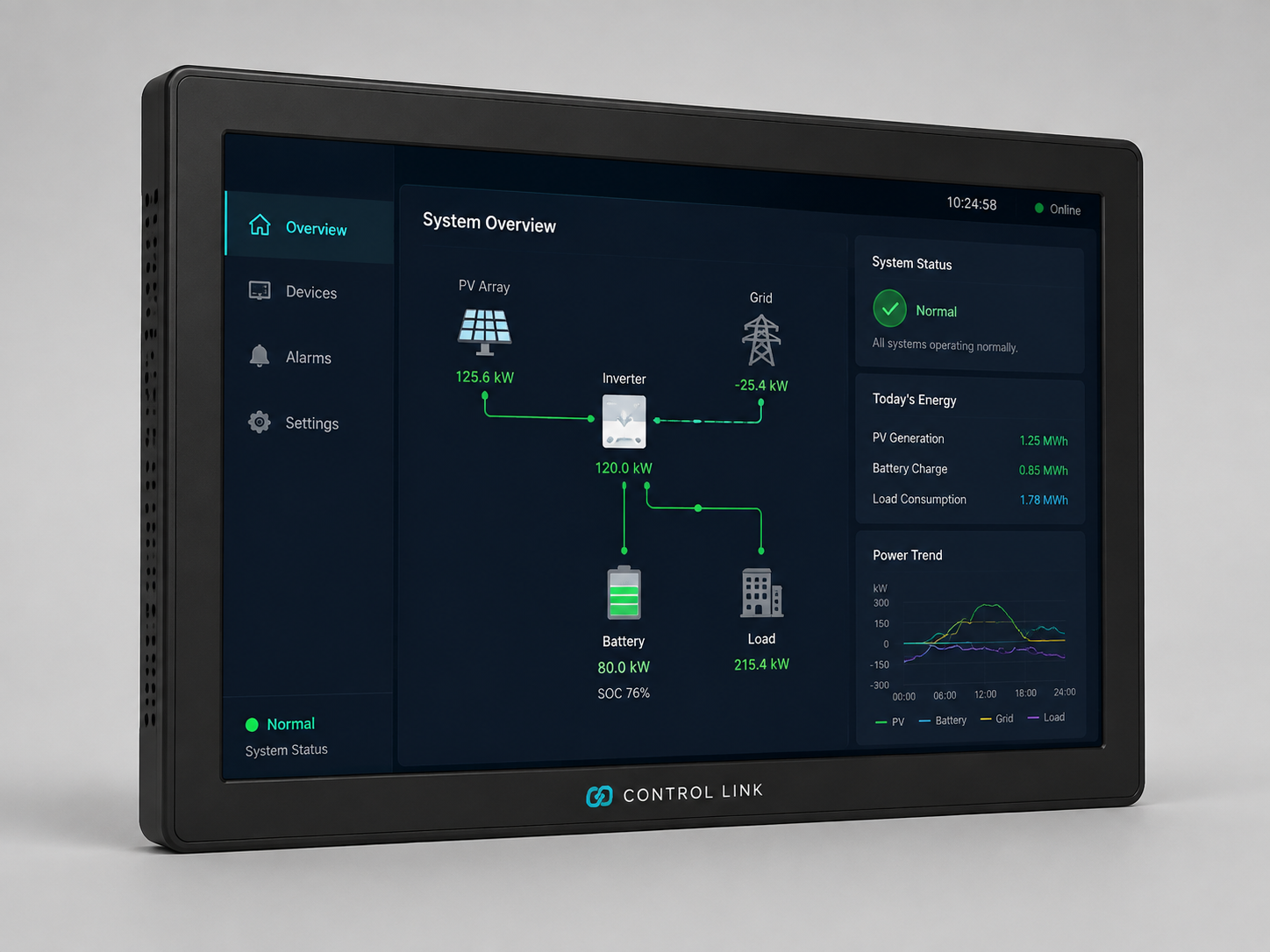
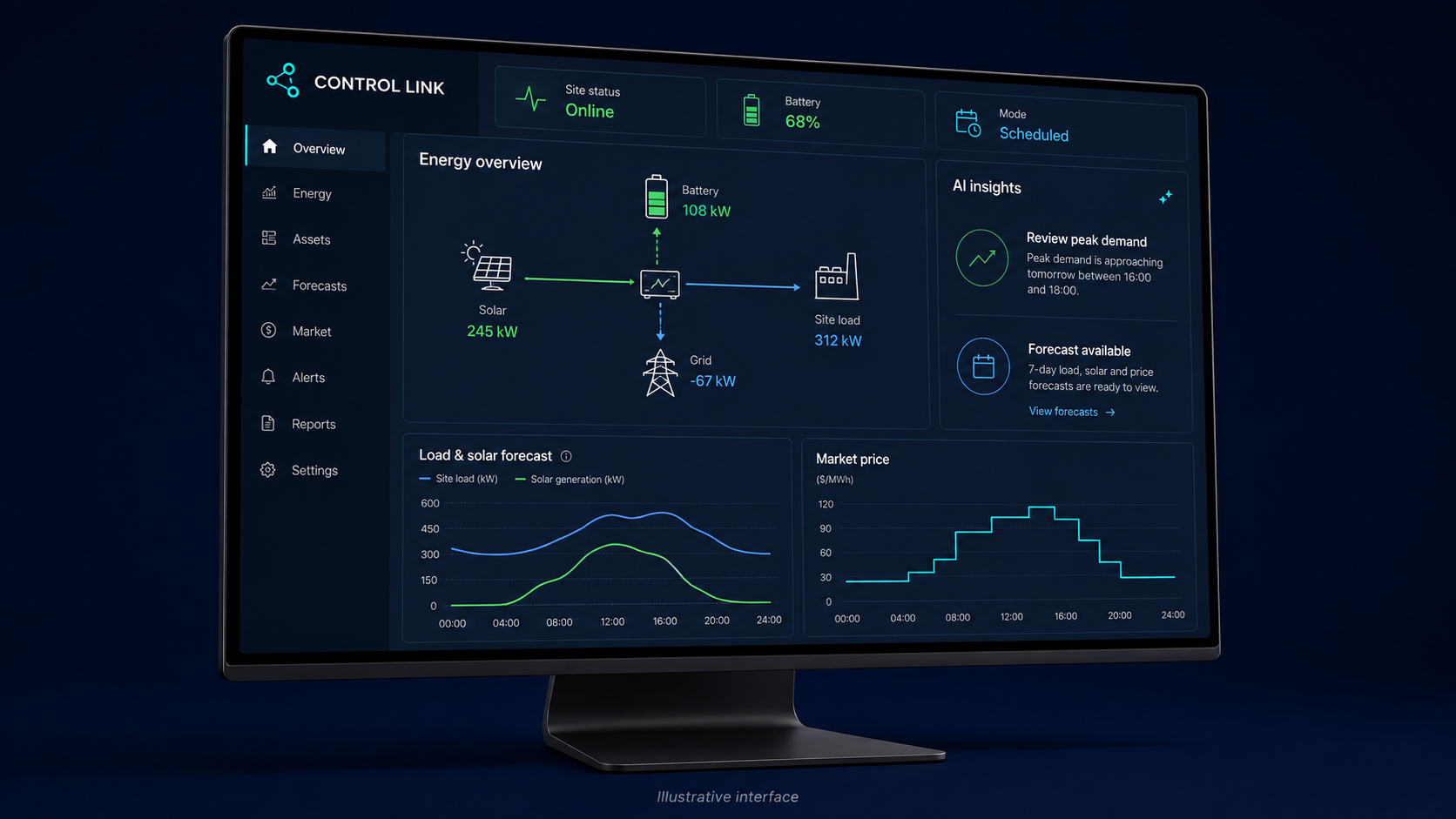
Combine historical energy use, live equipment information and forecasts to inform storage schedules and operating strategies. Compatible regional tariff and spot-price feeds help target energy costs in the market where the site operates.
Market feeds, AI tools and operating constraints are configured by project. Actual savings depend on tariff, equipment, weather and site behaviour.
Explore software & AI ↗Technology should strengthen your capability. Our design priorities are open integration, accessible operational information and systems that remain understandable and maintainable.
Specify interfaces and data exchange explicitly, including the selected protocol, device profile and direction of control.
Agree data access, export, retention and backup requirements as part of the deployment scope.
Keep operating limits, acceptance tests and maintainable configurations central to product selection.
Discuss product selection, OEM post-sales support and partner opportunities with Control Link. We work with integration partners to match hardware and software to project requirements.
Hardware specifications & procurement
OEM post-sales support
AU / NZ integration partner enquiries
Tell us your location, equipment and application so we can route your enquiry appropriately.
Explore anonymised examples of solar self-consumption, lower diesel dependence, critical-load restoration and charging within grid limits.
Use more locally generated solar while respecting a constrained grid connection and export limits.
Read the application case →Maintain an industrial energy supply where the grid is available for only part of the day.
Read the application case →Supply an off-grid facility while limiting overnight generator operation.
Read the application case →Anonymised reference deployments explain application approaches; they are not presented as a Control Link project portfolio.
Tell us your application, equipment interfaces and operating priorities. Ask for a product demonstration, a configuration review or support selecting an integrated EMS or tiered plant-control system.
[email protected] →Define your requirements before procurement.
Explore technical resources →